Can Film Blowing Extruder Machines Handle Thin Films Smooth Control and strength
May 16, 2026
Why do some of the world's most sophisticated plastics plants still produce fragile films that have holes, inconsistent thickness and bad seals? For the past 8 years I have worked as an film blowing extruder machine employee in the plastic film extrusion industry. I have seen this problem in Asia, Africa and the Middle East, in large companies and small stores.
This article explains and defines a film blowing extruder machine and its operation. Here you can find information on the machine controls the thickness of the film, its strength and surface polish. By the end of this guide, you will know exactly what to look for in a reliable machine or vendor.
What Is a Film Blowing Extruder Machine and How Does It Work?
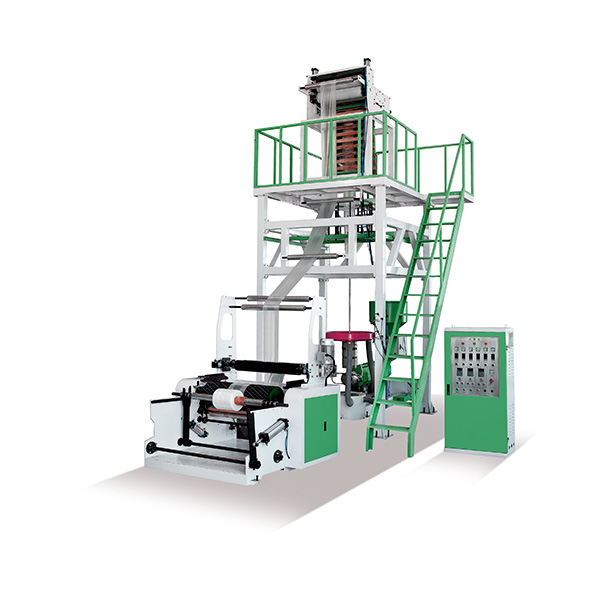
A film blowing extruder machine can use air pressure to convert the molten plastic resin into a thin tube. Finally the tube is flattened and rolled into a film. This process is known as blowing film extrusion. It has many common uses including agricultural covers, bags, wrapping films and packing sheets. The machine controls the film thickness by setting the air pressure and the die gap settings.
The operation begins with the introduction of the plastic pellets into the extruder barrel. Heat and a spinning screw will melt the plastic. The molten plastic is forced through a round die. Then an inflated bubble is formed with compressed air. Nip rollers flatten it as it rises and cools. The film rolls are ready for use.

Film Blowing Extruder Machine - Core Working Parameters
How Does Blow-Up Ratio Directly Control
How important is the blow up ratio (BUR)? This is a question many customers ask. Yes, it is more important than most people think. BUR is the ratio of bubble diameter to die diameter . As the BUR increases the cross-directional stretch of the film is increased. So it gets thinner and broader. A good BUR, when properly applied, creates a transparent, thin coating with a smooth, tear-resistant surface.
Special care should be taken in setting the BUR on thin sheets below 30 micron. If the BUR is not enough, the film will get thick and hard. The BUR is too high and the bubble can shake or even pop. The desired range is a function of the type of resin and the die design. Ruian Yunfeng Machinery Co., Ltd is a Chinese film blowing extruder machine manufacturer.
How IBC Technology Helps Thin Film Stability and Output Speed
This is Internal Bubble Cooling, or IBC for short. Not only does it cool the outside environment, it traps the chilly air inside the bubble. The dual-cooling system keeps the bubble stable even at higher velocities. IBC can suppress the wobbling of the bubble that causes the fluctuation of the thickness. Improvements in film consistency and speed up to 40% are possible with IBC in thin-film lines.
Sensors inside the bubble detect the air volume of the IBC systems. The airflow is adjusted in real time by a PLC controller. This eliminates the need for the operator to make any adjustments to the machine while it is in operation. One big advantage for bulk buyers is that the film is consistent from roll to roll.
BUR Settings Compared Across Common Film Types & Resin Grades
Key Factors That Affect BUR Performance in Thin Film Lines
For lower BUR settings a larger gap is required and the lip gap should be the same as the desired BUR.
The cooling uniformity depends on the air ring configuration, and air rings with two lips are better for the stability of the thin film.
The response of the bubble to stretch forces may be altered by adjusting the resin melt index (MI).
The gauge bands in the thin film are a result of variations in the frost line height (FLH), thus it is important that the FLH remains constant.
In order to prevent optical defects in clear film the temperature of the cooling air should be within ±2°C.
Single-Layer vs Multi-Layer Blown Film Machines for Thin Film Output
Simple, low-cost packing is more suitable for single-layer machines. 3-layer machines provide a good balance of strength, barrier properties and cost for retail and food applications. 5-layer machines are perfect for producing high-quality barrier films, but have a higher initial capital investment and require trained operators.

What Parts Most Impact Surface in Blown Thin Film
One of the major concerns with thin films is their surface smoothness. Buyers often complain about surface issues like haziness, roughness, or gelling. These problems also arise from the machine parts and the resin used. The final product will have a silky appearance and feel, which is a function of several things such as the die, air ring, screw design and cooling system.
The key element in the extruder is the die. Scratches or uneven flow channels, for example, wear the die and cause streaks to appear on the film. Melt flows evenly around the entire circumference of a well-machined spiral mandrel die. The result is a uniform optical finish and the removal of weak spots in the film.
Advantages and Disadvantages of Different Die Designs
Among the most popular designs for thin films is the spiral mandrel die. It offers the highest optical quality and the most uniform dispersion of resin. The spider die is cheaper and older, but it weakens the film in the places where it leaves weld lines. The basket die is not good for thin films, but it works great for really thick ones.
Design, Advantage, Disadvantage & Film Thickness Range
Critical Parts That Must Be Inspected for Surface Quality Assurance
The lip gap must be measured with a feeler gauge before each manufacturing run.
Air ring vanes should be kept clean to avoid hot spots and orange peel surface flaws.
The screw mixing section needs an appropriate Maddock or pineapple mixing head to prevent the formation of gel.
If the bands on the barrel heater are not heating evenly, there will be spots of unmelted resin in the film.
Use haul-off rollers with a smooth silicone rubber surface to avoid scuffing the thin coating.
Sector-by-Sector Use of Blown Film Surface Quality Requirements
The surface quality standards required by different industries are different. In the medical and culinary industries, films need to be flawless and have the best possible clarity. Increased tolerance is necessary in agriculture but resistance to ultraviolet light and punctures is vital. E-commerce bags need to be corona treated to improve the adhesion of print ink.
Which Machine Configurations Give the Best Thin Film Tensile Strength
The tensile strength of a thin film is the maximum breaking point under tension. This is important for stretch wrapping, bag closing and other tough forms of packaging. The strength of the film under tension is dependent on the machine setup; screw design, BUR setting, cooling rate and resin blending system. And to do this right, you need to select the proper machine configuration for your specific film grade.
Currently, there are a number of film blowing extruder machine manufacturers that offer machines with barrier screw design and auto-dosing gravimetric blenders. They can control the ratio of the resin blend precisely. One way to increase tensile strength without increasing thickness is by blending LLDPE with a small amount of mLLDPE. This can increase the tensile strength by as much as 30%. A win for your wallet and the planet: less plastic waste per roll and a tougher film for the consumer.
Thin Film Tensile Strength Improved by Machine Upgrade
Key Machine Features That Directly Raise Thin Film Tensile Strength
Use screws with high L/D ratios (30:1 or higher) for higher strength films. This will improve melt uniformity.
Low temperature die zones limit thermal degradation to maintain the molecular chains of the resin.
Oscillating haul-off systems distribute the gauge variation evenly across the roll resulting in uniform strength.
Gravimetric dosing blenders guarantee the resin blend ratio is accurate in every shift.
Auto-thickness control (ATC) systems dynamically adjust the die gap to ensure uniform film strength.
Machine Type vs Thin Film Tensile Strength Output
For types of film with low demand, basic machines do well. The tensile strength increases progressively with the incorporation of IBC and co-extrusion layers. 5 layer machine with ATC offers the highest strength levels – ideal for medical, food-barrier and premium stretch films.
Frequently Asked Questions
What is the minimum thickness of film that a blown film machine can produce?
The most common blown film machines can produce films of 8 to 10 micron thicknesses. Special dies and IBC system of advanced machines from leading china film blowing extruder machine manufacturers can go as thin as 5 micron.
Precise control of the die gap is needed for ultra-thin films (<10µm).
IBC cooling is needed to keep film stable at ultra-thin gauges.
mLLDPE resins are preferred for films thinner than 12 microns.
Mono-layer vs. co-extrusion blown film line? How do I decide?
Mono-layer lines are perfect for simple, low-cost packaging. Co-extrusion lines are needed when the film requires barrier, seal or structural properties that one layer cannot provide.
Basic bags, bin liners and agricultural films are all mono-layer options.
3-layer co-ex is a good candidate for food pouches, stretch wraps and lamination base films.
5-layer co-ex for high barrier, medical grade or specialty films.
Why is the film thickness sometimes different in blown film lines?
The die temperature is uneven, the air-ring cooling is uneven, the frost line height changes, and the resin flow is unstable, which causes the thickness to vary.
Check & clean air ring vanes every 8 hours of production.
The roll has a die head which automatically revolves to spread out the gauge bands.
Use a camera or laser level to watch the frost line height.
How often do you need to change the film blowing parts of the extruder machine?
“The screw, barrel and die lips are parts that wear out over time. Wear depends on type of resin, the filler content and the annual running hours.
Check screw tips and other parts of the film blowing extruder every 6 months.
The inner lining of the barrel lasts 3-8 years, depending on how abrasive the resin is.
Re-polishing of the lips must be done every 12-18 months for gel free film output.
Conclusions
A properly configured film blowing extruder machine provides the best combination of smooth film surface, accurate thickness control, and high tensile performance - all in one system. The blown film process is second to none of any other plastic film process in the balance of film quality, flexibility and production cost. With the right machine setup, the blown film process can create anything.
For buyers seeking trusted film blowing extruder machine suppliers and film blowing extruder machine manufacturers, we highly recommend Ruian Yunfeng Machinery Co., Ltd. Among China film blowing extruder machine manufacturers this firm is head and shoulders above the rest.

