What Is Electronic Tape Uses Materials and Benefits
August 27, 2026
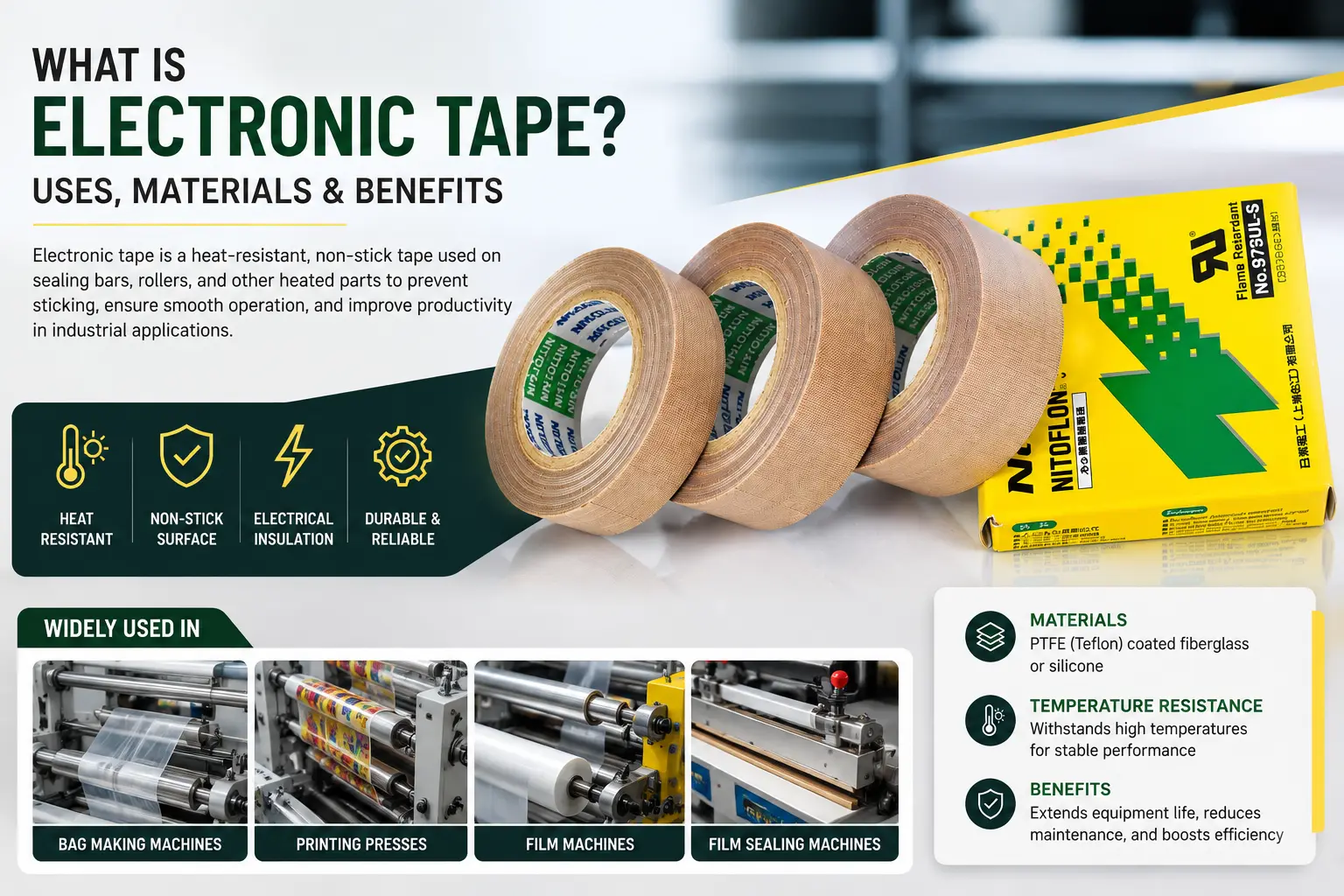
Electronic tape is a heat resistant, non-sticking tape. It protects heating parts. It seals machine parts. It insulates electric parts as well. This tape is usually a PTFE (Teflon) covered fiberglass or silicone. It is used in factories for bag producing lines, printing presses and film machines. It is wrapped around a heated roller or bar.
If you are running a packing or printing line, one worn tape might halt the entire shift. That's why this little thing attracts so much attention in the workplace.
What Is Electronic Tape, Exactly?
The Core Definition in Simple Terms
This tape is a thin heat-resistant strip. It covers the heated portion. This prevents the film clinging to it. The tape is not "electronic" like cables or circuits. The term derives from its employment in electric heaters within sealing machines. The tape's right there on the hot bar.
Why It's Called "Electronic Tape" in Industrial Use
The moniker remained because the tape constantly sat on part of an electric heater. Any heat-bar cover was called "electronic tape" from the floor. Then the name went on supplier lists. This tape is comparable to what some term heat sealing tape. Both are identical kind of hot bars.

What Is Electronic Tape Made Of?
This tape is powered by two things. First is the coating. Second, it's support. The coating influences how well the film will release from the surface. The support defines the amount of heat and stress that the tape can endure. Most purchasers choose from three basic categories.
PTFE Adhesive Tape - The Industry Standard
The most prevalent kind of this tape is PTFE sticky tape. It is used by plants in packaging and printing. PTFE stands for polytetrafluoroethylene. It is a plastic with an extremely low coefficient of friction. Therefore, the heated film will not adhere to it, but will roll off. PTFE adhesive tape is also resistant to most of the solvents and inks used in printing.
PTFE Glass Cloth Tape - Fiberglass Reinforcement Explained
PTFE glass cloth tape is PTFE film laminated to woven fiberglass fabric. Fiberglass makes it tough. It also holds its form in heat and cold. This construction works well for the open-close action of a sealer bar. It's a good choice if the tape receives a lot of stretching, folding, or clamping.
Silicone Adhesive Tape - The Flexible Alternative
"Silicone adhesive tape is soft and flexible. It works on bent rollers and uneven surfaces. It holds better on curved surfaces than strong PTFE tape. Silicone sticky tape is typically used on embossing rollers or curved guide bars. There would be a flat tape rising at the edges. PTFE doesn't work as well for film release. So it is rarely utilized on direct sealing bars.
How Heat Resistant Is Electronic Tape?
Temperature Ranges of Heat Resistant Tape
Heat resistant tape can stand up to constant high heat. It must not slip. It must not lose its hold. In the plastics sector, PTFE-based tape is noted for its superior resistance to heat compared to ordinary tape. That's why it goes on heater bars. Exact heat ratings may vary according to tape thickness and kind of adhesive. Always verify the spec sheet for your tape. Do not extrapolate from another product.
Heat wears tape more than one high cycling peak of heat
The adhesive might break down before the tape film
Thicker tape tends to endure longer under friction.
Storage also impacts the life of the tape before usage
Where Heat Sealing Tape Fits Into the Picture
Some providers use the phrase heat seal tape as a replacement for electronic tape. That usually implies tape on the actual sealing jaw of a bag machine. With heat and pressure, the jaw shuts on film. This melts the film into a seam. This jaw needs a nice tape release. It ought to have adequate cushion for an equal seal line also.
PTFE Release Tape vs. Non-Stick PTFE Tape - What's the Difference?
Release Properties Explained Simply
PTFE release tape makes release of the material from a heated surface easier. This occurs after the procedure, like film coming off a sealing bar. PTFE non-stick tape is a more general word. It will cover any PTFE tape that loses its stick in the process. In practice, these two words have a lot of overlap. Many providers do not distinguish clearly between them.
Common Confusion Points Buyers Have
Typically, buyers believe that these two are quite distinct things. The true difference is little. It's primarily about what stage of the work the provider is referring to. Thickness adds another layer of complexity, as well. For mild release tasks a thin PTFE release tape may be suitable. A thick non-stick PTFE tape is good for continual contact and rubbing.
Where Is Electronic Tape Actually Used?
As Printing Machine Accessories
This tape is appearing on the printing lines. It plays anyplace a film plays on a hot or friction-heavy bar. It is used as a printing machine accessory, etc., to protect rollers and bars from ink build-up and heat damage. This will maintain print quality for lengthy runs.
As Bag Making Machine Accessories
This tape is on the sealing and cutting bars of the bag producing equipment. These bars weld and cut plastic bags It is one of the usual accessories of bag manufacturing machines and must be checked often. A tired looking strip might break the seal, and make the bag seem quick.
In Heat Sealers, Film Wrapping & Packaging Lines
Bag machines don't only have electronic tape. It also includes stand-alone heat sealers, shrink tunnels and wrapping equipment. Where heated metal meets plastic film, you will usually see a strip of PTFE or silicone tape protecting the connection.
Key Benefits of Using PTFE and Silicone Adhesive Tapes
Lasts during heat cycles – excellent PTFE and silicone adhesive tape may survive several open-close cycles on a sealer bar without splitting
Non-stick action ensures less downtime – clean release means less stopping to wipe melted film
creates electrical safety - PTFE has great insulating properties therefore it creates a protective layer around active heater parts
Chemical resistant - PTFE tape is resistant to solvents and ink used in printing
Easy to install - most rolls are cut and installed on site with no additional tools
How to Choose the Right Electronic Tape for Your Machine
Matching Tape Type to Machine Function
The property of this tape is not just about its pricing, but where it sits. For a flat sealing bar, the use of PTFE adhesive tape or PTFE glass cloth tape is ideal. Both keep their form nicely when clamped repeatedly. Silicone sticky tape is fit for a curved roller. It wraps around curves without rising at the sides.
Thickness, Width & Adhesive Backing Considerations
Tape thickness impacts both cushion and heat flow. Sometimes thicker tape is not the way to go for every bar. Width should match the bar size exactly. This prevents exposed metal edges. Glue quality is also important. Weak adhesive may make the tape slip while running rapidly. This may provide unequal sealing.
Common Mistakes When Installing Electronic-Tape
Even excellent tape goes bad early if it's put on badly. Hot areas are caused by air bubbles beneath the tape. These patches wear quickly. They may leave a ridge, overlapping the borders, instead of a smooth butt joint. That ridge will mark every piece of film that goes over it." Not giving the bar a complete clean initially is a mistake as well. Old residual glue may significantly shorten the life of the fresh tape.
Frequently Asked Questions
What is electronic tape used for?
This tape is used to cover heaters and sealing bars on printing and packaging equipment. This prevents plastic film from adhering to them. It operates on heat sealer bars, Cutting bars and rollers. It also provides an extra layer of electrical insulation over the heated portion.
Prevents film from directly contacting hot bars.
Reduces machine downtime from trapped film
Offers modest insulation over live parts
How much heat can PTFE adhesive tape withstand?
The PTFE adhesive tape is for continuous high temperature use in bar sealing and cutting applications. The specific grade depends on the product and adhesive used. Consult the maker's datasheet before installing it in a new machine. But it's generally not just one peak of heat, but heat cycling that is a significant effect in how long tape lasts.
Always verify the rated range on the actual product sheet
Steady heat alone wears tape slower than cycle heat
Thicker tape absorbs greater repetitive stress
What's the difference between PTFE release tape and non-stick PTFE tape?
PTFE release tape basically helps objects come apart following a heat or press process. The non-stick PTFE tape is non-stick all the way through, not just at the end. In practice, many vendors use the two phrases interchangeably. The ideal solution is to advise your supplier precisely where the tape will make contact.
The concepts are quite similar in typical use
The label is less important than the location and thickness
Ask for the tape job stage
Is electronic tape used in bag making machines?
Yes. Bag manufacturing machines come complete with this tape. It is located on the sealing and cutting bars where film is sealed and sliced into bags. It has to be changed after a certain period of time, since it is a normal bag manufacturing machine accessories. Worn tape is a typical cause of poor or inconsistent bag closures here.
Available on sealing bars, and cutting bars
Needs to be checked and swapped out often
Directly affects bag seal quality
Conclusion
Electronic tape is compact and inexpensive. But it does a huge job. It is a mark of quality. It is useful in working with film. It also enhances machine uptime. You have to choose the proper kind. Select PTFE adhesive tape or PTFE glass cloth tape or silicone adhesive tape.
If you also require the machinery, check out Ruian Yunfeng Machinery Co., Ltd. Having more than 20 years of experience in the plastic machines industry. It has more than 10 national patents. Its portfolio of accessories also includes film blowing, bag manufacturing, and printing equipment. Tape, electronic, including.

