What Is an Industrial Flexographic Printing Machine Used For Film paper foil
September 13, 2026
An industrial flexographic printing machine is a press that prints from a roll. It uses soft, raised plates to put fast-drying ink on a moving sheet. It runs from one roll to the next, without stopping. It prints plastic film, paper, and aluminum foil. Most of its work is packaging and bags. The Yunfeng flexo range prints eight materials: BOPP, PET, PE, PVC, CPP, cellophane, paper, and aluminum foil.
This guide sticks to the published specs. It shows what the press prints, how the ink gets on, how color and roll changes affect output, and how to read a spec sheet.
How Does Flexo Printing Actually Work?
Flexography is a printing method that uses a raised, flexible plate. Ink sits on the raised parts. The plate then presses that ink onto a moving sheet.
The ink path is short. Ink moves from the fountain roller to the anilox roller. From there, it goes to the raised image on the plate. Then it goes onto the material running underneath.
The web never stops. That is the whole idea of a web-fed press. Material feeds off one roll, passes each print station, dries, and winds onto a second roll.
Why the Relief Plate Changes Everything
Three packaging techniques vary only in plate type. A raised plate is used by Flexo. In gravure, cells are carved into a cylinder. Offset is done on a flat plate with no change in height.
Flexo handles rough and elastic material so inexpensively because of the raised plate. Patent documents indicate that stretch film and coarse surfaces may be printed using Flexo at a reasonable cost. Other ways are falling short there.
Film, Paper, Foil: Which Materials Can the Press Handle?
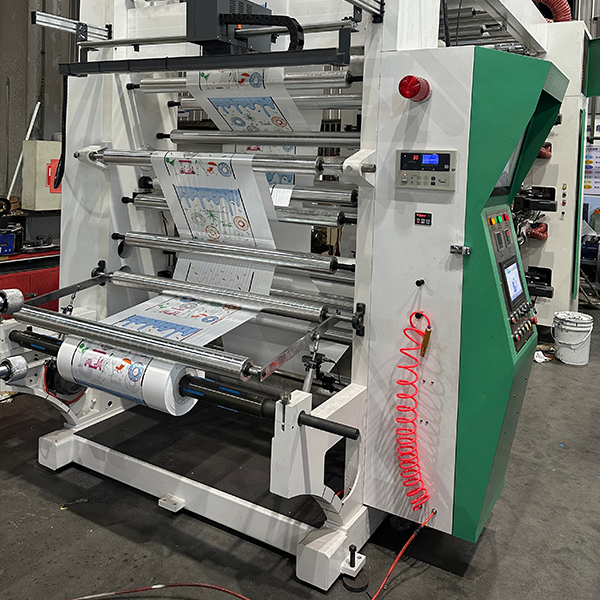
A flexo press handles aluminum foil, plastic film, and paper. It also prints built-in laminates. Yunfeng says their flexo presses are suited for multi-color continuous printing on BOPP, PET, PE, PVC, CPP, cellophane, paper, and aluminum foil.
The major share of this work is represented by plastic film. BOPP and PET film printing covers bags, labels, and snack wraps. Paper bags, paper wraps, and a light board. Paper covers for barrier laminates and sealed pouches are made of foil.
Material Behavior at a Glance
What Changes When You Switch From Film to Paper?
Soaking changes. Paper pulls some ink into its fibers. A little spread is normal, so the print can look softer. Film and foil pull in nothing. Every drop stays on top and has to dry in the air.
That one difference drives the rest of the setup. Film and foil need faster-drying ink and more care at the dryer. Paper is easier to dry, but it sheds dust into the ink.
Tension changes too. Paper holds its shape well. Thin film stretches, and a stretched web loses register.
How Do the Anilox Roller and Plate Control Print Quality?
Print quality comes mostly from the anilox roller and the plate paired with it. The anilox roller is a metal roller covered in tiny cut cells. Cell size decides how much ink reaches the plate.
Small cells hold less ink. They give sharper detail and a lighter ink layer. Bigger cells hold more ink and give stronger solid blocks.
A photopolymer printing plate is exposed to light, then washed out. That leaves the image area standing raised. One plate is used per color, and each plate goes on its own plate cylinder.
Cell Size, Ink Layer, and Setup Time
A plate and anilox that do not match cause dot gain, filled halftones, or weak solids.
Fine screen work and heavy solid blocks rarely suit the same anilox spec.
One plate per color means six plates to mount and line up on a six-color job.
Plate mounting is usually what sets changeover time, not press speed.
A doctor blade wipes spare ink off the Anilox, so only the cells carry ink forward.
Why Does Non-Stop Output Depend on the Winding Setup?
Steady output depends on the unwinding and rewinding system. On a single-position machine, every roll change is a full stop. Stops are where waste film and lost hours come from.
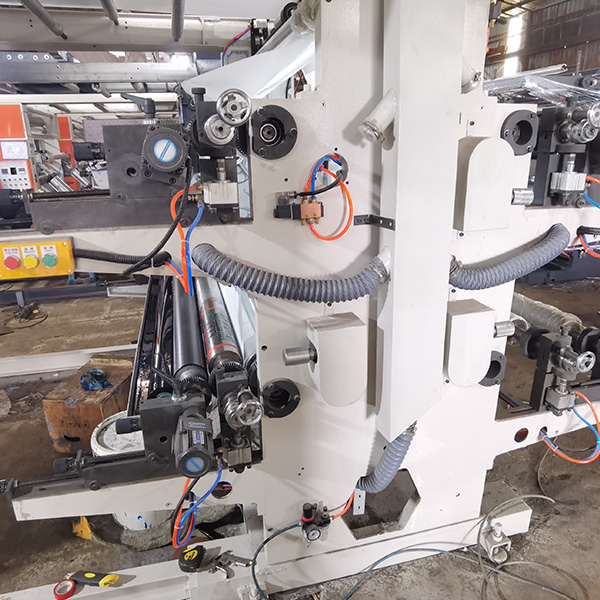
Yunfeng's published design uses a double position flip structure on rewinding and unwinding. That lets the machine take material without stopping. Two controls support it. Anti-winding and unwinding traction run on a torque motor. Magnetic powder brakes handle winding and unwinding traction. Maximum roll diameter is Φ450 mm.
In simple terms, torque control keeps tension even as the roll gets smaller. The brakes stop the roll from running ahead. Together, they protect the register on the thin film.
Stack, Central, or Inline: Which Press Layout Fits?
Flexo presses come in three common layouts. Each one deals with web stretch in a different way.
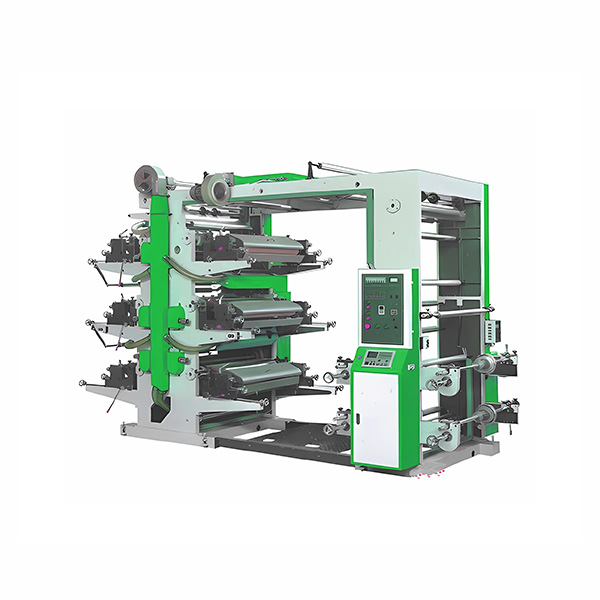
Stretch and register need to decide the layout. Steady material suits a stack type flexo printing machine well. A very thin film with tight register targets leans toward a shared central drum.
Two, Four, or Six Colors: How Many Do You Need?
Color count is a business choice more than a technical one. Yunfeng lists 2, 4, and 6 color builds across the YF-FP600 and YF-FP800 models.
Two colors suit a simple logo and text work on bags. Four colors cover full CMYK graphics. Six colors add spot shades, brand colors, or a white layer under the art.
The handy detail on the product page is flexibility. The color group can be raised or lowered to suit the buyer. The front and back can also be printed in one pass.
Do You Need a White Deck on Clear Film?
You need a white deck when the art must stay clear, whatever the bag holds. Clear film has no cover of its own. So colors shift as the contents change.
A white layer printed first gives the other colors a steady base. Skip it, and one brand color can look different on every product.
Where Does an Industrial Flexographic Printing Machine Sit in a Packaging Line?
The press sits third in a four-stage line. The order is film blowing, then printing, then bag making, then slitting. Yunfeng builds machines for all four stages. That is why the press is often quoted as part of a line.
From Blown Film to Finished Printed Bag
Resin is melted and blown into a film tube, then wound into rolls. Those rolls feed the press. The press prints the design and winds the web back up. A bag making machine then seals and cuts that roll into bags. A slitting machine trims roll stock to the width the next stage needs.
The end products all come from printed roll stock. That includes shopping bags, vest bags, food film, roll bags, wrappers, and labels. A flexible packaging printing machine and a plastic bag printing machine are the same press doing two of these jobs.
How Do You Read the Spec Sheet Before You Commit?
Five numbers decide if a press fits your work. They are material width, printing width, printed length range, roll diameter, and speed. Power and size decide if your building can take it.
Published Model Specifications
Three Notes Before You Sign
Printing width is always less than material width. A 600 mm machine prints 560 mm, so plan for the blank edge.
The 191–914 mm printed length range is the repeat length. Check your bag or label repeat against it.
Power climbs with color count, from 5 kW at two colors to 15 kW at six. Check your power supply first.
The disclosed control features are also worth a serious reading. They are electromagnetic valve speed control or frequency conversion on the main engine, intelligent electric temperature control, single baking (drying) design, and shaft mounting.
How Do You Judge the Factory, Not Just the Machine?
A press is a 10-year fixed asset. The supplier is as important as the standard. There are three documented facts that are worth checking with any maker.
Focus: Ruian Yunfeng Machinery Co., Ltd. was founded in 2001. It has been working in plastic machinery since then. The portfolio comprises film blowing machines, bag manufacturing machines, printing presses, and slitting machines.
Scale: The plant yearly produces 500 units and covers 10,000 square meters. In 2019, the company relocated to its new site in Zhixin Industrial Park, Ruian, Wenzhou, Zhejiang. More than 60 countries reach the products. These include India, Mexico, Canada, Spain, Russia, Singapore, and Thailand.
Certificates and support: The company has more than 10 national patents. Honorary certificates on the certification page. Support comes with a one-year guarantee, and engineers may go overseas. 12 hour response times Machine testing is performed with the buyer on site, or filmed on video if the buyer is unable to go.
Frequently Asked Questions
What is a flexographic printing machine used for?
A flexographic printing machine is used to print packaging material in roll form. It mainly prints plastic film, paper, and aluminum foil. It serves bags, wrappers, and label stock.
Prints without stopping the web
Common output is shopping bags, food film, and roll bags
Can a flexo press print on aluminum foil?
Yes, a flexo press can print on aluminum foil. Yunfeng lists foil among the eight materials its flexo presses handle. The others are BOPP, PET, PE, PVC, CPP, cellophane, and paper.
Foil does not soak up ink, so the ink dries on top
Used widely for barrier laminates and pouches
What is the difference between flexo and gravure printing?
The difference is the plate. Flexo prints from a raised plate. Gravure prints from a cylinder with cells cut below the surface.
Flexo plates cost less and are faster to make
Gravure suits very long runs with fine tone work
How many colors does a packaging press need?
Most packaging work needs four colors, because CMYK covers full graphics. Two colors suit logo and text bags. Six colors add spot shades or a white layer.
Yunfeng builds 2, 4, and 6 color versions
Color groups can be raised or lowered to order
What is an anilox roller?
An anilox roller is a metal roller with tiny cut cells. It gives the plate a set amount of ink each turn. Cell size decides how much ink moves across.
Smaller cells give finer detail and a lighter ink layer
Plate and anilox must match, or you get dot gain
Is Yunfeng a factory or a trading company?
Yunfeng is a factory. The company states it makes film extrusion machines, printing machines, bag making machines, slitting machines, and related gear.
Based in Ruian, Zhejiang, China
Factory visits and machine testing are open to buyers
Conclusion
An industrial flexographic printing machine prints eight very different materials on one moving sheet. The list runs from BOPP and PET to paper and aluminum foil. It runs in two to six colors at 5 to 50 m/min. Check printing width and repeat length against your product first. Then check the color count against your artwork.
If you make bags or flexible packaging, Ruian Yunfeng Machinery Co., Ltd. is worth a look. It builds the film blowing, printing, bag making, and slitting machines in one place. So the press is matched to the line it will run in. Full specs for each model are on the printing press category page.

