How Does the Best Mini Film Blowing Machine Control Thickness Die Gap Air
August 26, 2026
Why does one film roll remain stable at 0.10mm? Why another drift from 0.08mm to 0.15mm on the same line? Often, the solution boils down to three pieces. These components are the die, the air ring, and the gap. They operate as a system. The first thing that anybody running the best mini film blowing machine knows is this. You can't just tweak a little and expect excellent results.
In this article, we will examine how each portion affects the thickness. It also provides realistic tolerances for tiny machines. And it exposes frequent operator errors. The best mini film blowing machine is more than a number on a spec sheet. It is about the interaction of die, gap, and air.
What is the Best Mini Film Blowing Machine?
The best mini film blowing machine is a tiny plastic film blowing machine. The blown film extrusion machine is small and portable. It dissolves resin. It forces the resin through a circular die. It then blasts the resin into a thin film tube. It is basically the same technique as a bigger PE film blowing machine.
PE means polyethylene film blowing machine. A little machine merely produces less film every hour. This is good for small workshops and startup companies. The machine is smaller; thus, tiny adjustments in the settings are quickly evident in the completed roll.
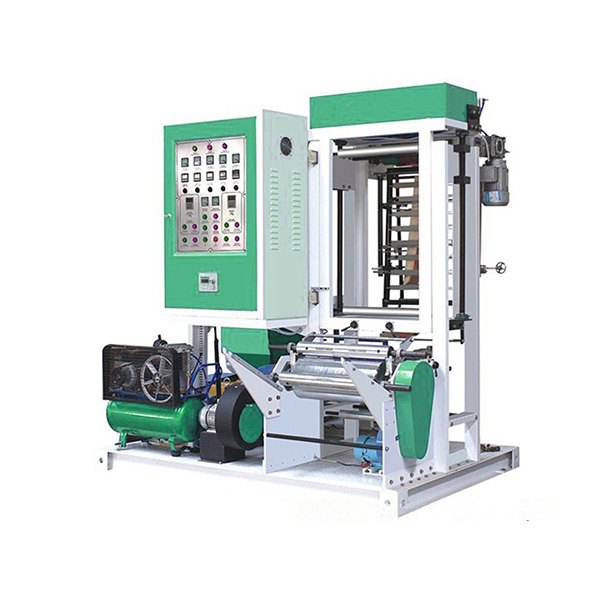
Key Components and Their Role in Thickness
What Role Does the Die Play in Thickness Control?
First, the die forms are made thicker. It defines the initial spacing. In this space the resin flows before hardening. The bigger the space, the more resin will flow through. Flow blocked by tiny gap. Wall thins early. This spacing is adjusted by bolts around the die body on a plastic film blowing machine.
Operators twist the die bolts a bit at a time. As they go, they observe the bubble size and the flatness of the film. Here are some key points:
The spacing adjustments should be moderate stages, not massive leaps. This holds the bubble in place.
Uneven gaps are often the source of thick and thin regions in the film.
The die is small in size on a small scale film blowing machine. So each variation in spacing has an increased influence on the final gauge.
Die Gap or Air Ring - Which Matters More for Thickness?
The gap and air ring don't operate by themselves. The die decides where to start The air ring completes the task. The gap controls the amount of resin that exits the machine. The air ring affects the resin cooling rate. This cooling rate sets the ultimate wall thickness.
Thickness Control Factors at a Glance
The bottom line on any PE blown film machine is to regard the die gap and air ring as one integrated system. Alter one setting. Make a quick test. See what you get. If you still need to, tweak the other setting.
How Does Air Ring Cooling Affect Film Gauge?
Air ring cooling defines a critical height. At this height the bubble is no longer a stretched film and becomes solid. The ultimate thickness is determined by the height. This position we have called the frost line.
Where it develops is down to two things: how much air the ring emits and how evenly that air is distributed. Gage bands repeating around the film are a common characteristic of a polyethylene film blowing machine with unequal airflow.
More air makes the bubble freeze quicker. This influences how much it stretches at first.
A single air ring is typical on a small PE blown film machine. It requires a fine balance. Even a dual-ring configuration is more easily maintained.
Even with the same machine settings, the frost line might move at room temperature.
Mini vs Industrial Machines: What Changes for Thickness Control?
The fundamental criteria for thickness control are the same for all machine sizes. But compact machines provide fewer chances for mistake. An industrial blown film extrusion machine may have many air rings. It also features sensors that automatically correct minor faults. A small scale film blowing machine is largely dependent on the vision of the operator.
The operator measures by hand bubble size, wrinkles and frost-line height. This is a good choice for workshops that make bags, wraps and stretch film. At this production level, a best mini film blowing machine costs a lot less than a whole industrial line.
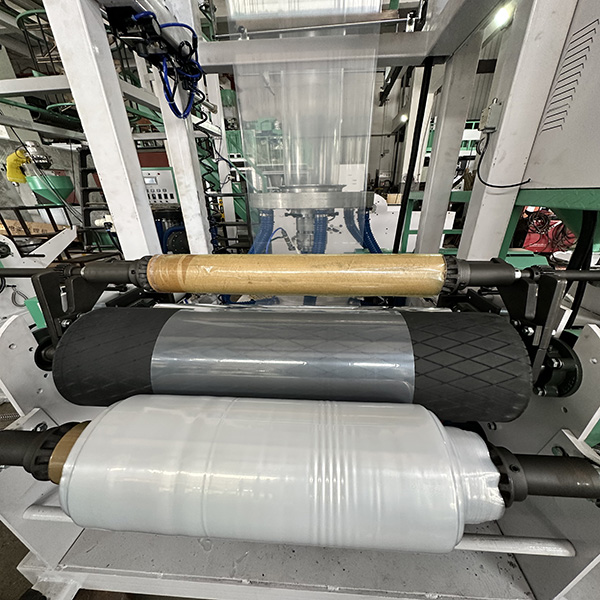
How Do Operators Recalibrate Thickness Settings?
If you alter the resin, the batch or the ambient temperature check the thickness parameters again. Don't let them sit undisturbed between runs. This is for an HDPE film machine or any line that blends resins. That habit is part of what separates the best mini film blowing machine settings from the ones that wander out of range mid-shift.
Do a brief length test. Take readings of the gage at a few places throughout the film.
Compare your reading to your goal. See the thick side or the thin side.
Adjust the die spacing on that side. Take tiny steps.
If changing the die does not solve the problem, check the air ring balance.
Run one more short test length before you begin the full production batch.
What Materials Affect Thickness Consistency?
The kind of resin dictates the allowable tolerance for placement mistakes. Each resin melts and cools differently. The three primary resins are HDPE, LDPE and LLDPE. Most plastic film extrusion machine layouts are based on these three.
HDPE is rigid. To eliminate gage streaks on a well-tuned HDPE film machine, a consistent melt temperature is required.
LDPE cools easier on an LDPE film machine. It's often used as the opening line of many.
LLDPE produces a stronger film with less material. But a faulty LLDPE film machine setup gives you more bubble difficulty than a bad LDPE film machine configuration.
FAQs
Can a mini film blowing machine achieve the same thickness accuracy as an industrial line?
The tiny film blowing machine can maintain a tight, constant thickness within its own output range. But it won't automatically equal the automatic gage control of an industrial line. The best mini film blowing machine for accuracy has a good air ring and attention to the die gap, with frequent gage checks.
What thickness tolerance is realistic for small-scale PE film machines?
Small scale PE film machines can usually keep thickness within a few percent of the intended gage. This is not a single setting, but the result of careful balancing of die and air-ring. The precise tolerance varies on the resin, film width, and operator competence. Generally, tighter tolerance necessitates more gage checks throughout the run.
Does the die gap or the air ring matter more for thickness control?
The die gap and the air ring both important. Neither of them influences the thickness by itself. The gap defines the initial wall thickness. As it cools, the air ring chooses where that thickness locks in. Work with them as a connected system for more consistent outcomes.
How often should thickness settings be recalibrated?
If you change the resin batch, the resin type or the room, check the thickness settings again. Don't wait for a timetable to be set. At the start of each run run a small bit of film. This detects most issues before you do a whole batch. simply if the parameters do not, simply a change of season may cause the frost line to alter.
Is auto gauge control worth it on a small plastic film extrusion machine?
Hand inspections may be reduced with auto gage control. But you don't need it on every little plastic film extruder. This is true at low outputs. It's more helpful when you have to go up on the film width or run length or tolerance." At a cheaper cost, excellent results may still be achieved by careful handwork.
Can a mini film blowing machine run HDPE, LDPE, and LLDPE film?
That's right. A tiny film blowing machine developed for multi-resin application can usually run HDPE, LDPE and LLDPE film. And it is true whether offered as an LLDPE film machine or a basic multi-resin line. Every resin has a unique heat and air ring set. Check the true specs of the machine to prevent a mismatch.
Conclusion
The die, gap, and air ring are not three separate elements. They function as one system. The best mini film blowing machine for small business needs three elements. It requires a good die. It requires an air ring to suit the film width. And it has to be built solidly so it holds its settings shift to shift.
Ruian Yunfeng Machinery Co., Ltd. manufactures a machine such as this. It is named YF-FEM600 It runs HDPE, LDPE and LLDPE resins. It can shoot films as wide as 600mm. It is 0.08 to 0.2mm in thickness. It generates 30-40kg of film/hr. The motor is 11 kW with one air ring for cooling. Looking for the best mini film blowing machine for consistent uniform film without the expense of a large industrial line? Then see the complete specs of the YF-FEM600 or explore the broad variety of film blowing machinery from the company.

